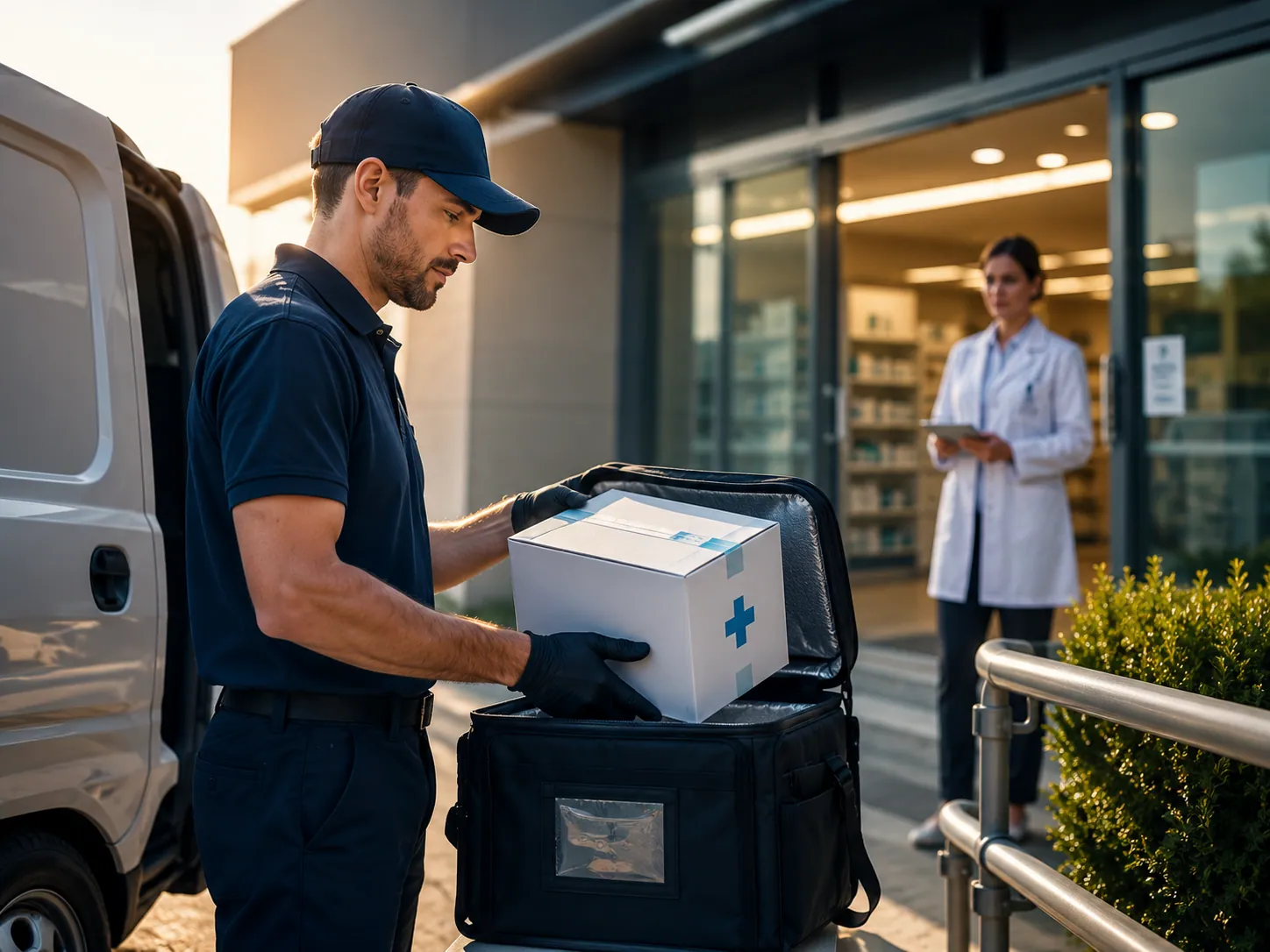
Cold chain delivery requires planning, communication, and careful handling for temperature-sensitive healthcare and pharmaceutical shipments.
Cold chain logistics involves shipments that may require careful temperature awareness, special handling instructions, and a delivery process that avoids unnecessary delays. Healthcare and pharmaceutical customers often need a courier partner that understands the importance of disciplined movement.
Start with the required temperature range
Cold-chain shipments are not interchangeable. The shipper should define the permitted temperature range, packaging method, conditioning instructions, maximum transit time, and what to do if a temperature excursion is suspected. A courier should not infer these requirements from the product name or assume that an insulated container provides validated temperature control.
Plan the pickup and receiving handoff
Before dispatch, confirm the pickup window, recipient availability, shipment readiness, expected route time, and whether the destination can receive immediately. Direct communication reduces unnecessary dwell time. For multi-stop work, evaluate whether the planned sequence is compatible with the shipper’s packaging and time limits.
Temperature records and exceptions
Where the service agreement calls for monitoring, the customer and carrier should agree on the device, who reads it, how records are retained, and how excursions are reported. Do not promise continuous monitoring or temperature certification unless the actual equipment and operating process support it. Escalate any suspected issue according to the customer’s written instructions.
Proof of delivery is one part of the record
A timestamped handoff and receiving contact help establish delivery completion, but they do not by themselves prove temperature compliance. For sensitive shipments, pair custody records with the packaging and temperature documentation required by the shipper.